Stone walls in Ticino: types, materials and when to call a professional
- Stone walls
- Stone
- Construction
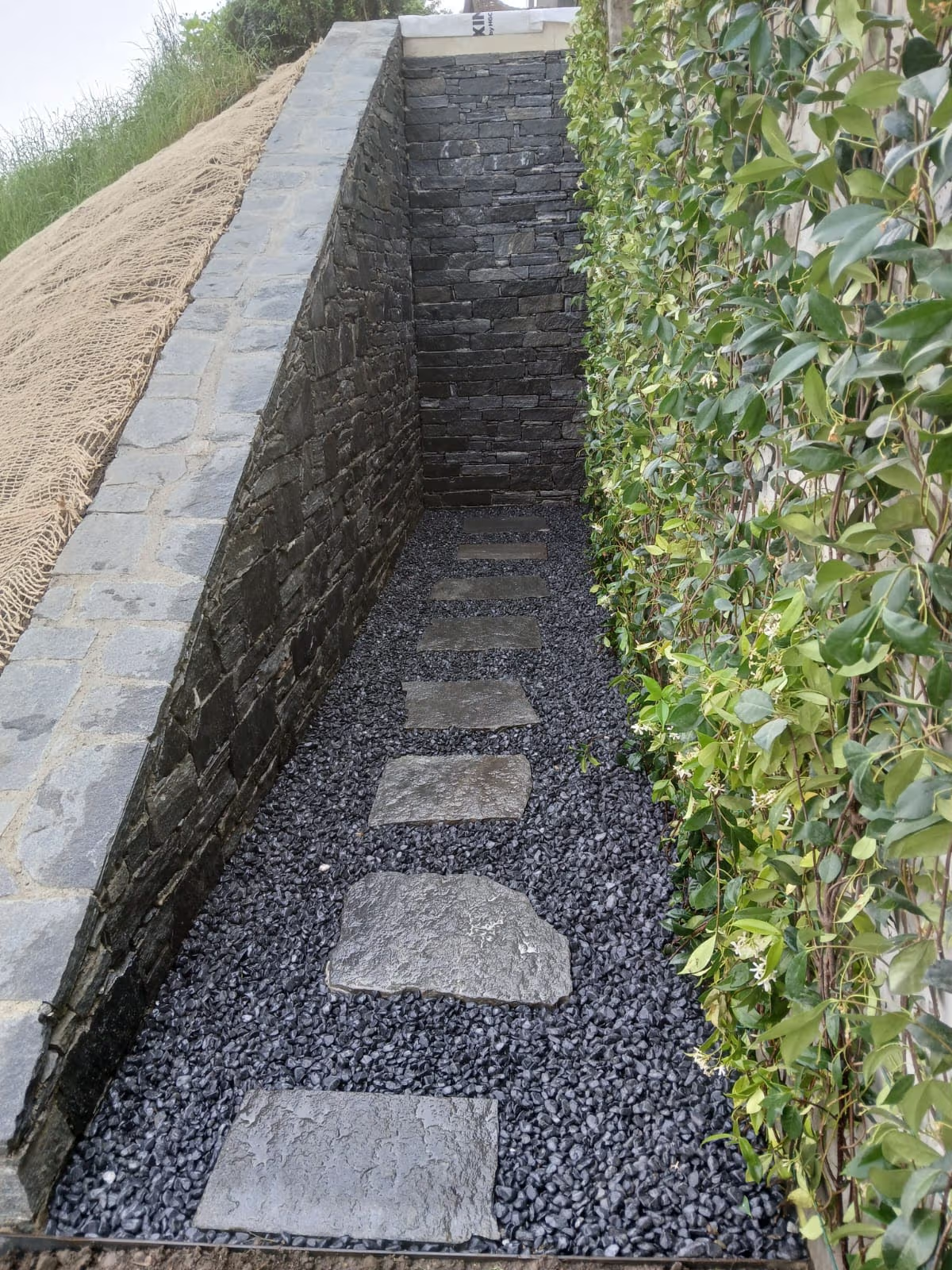
Stone walls are part of Ticino's built landscape almost as much as the sasso houses and the agricultural terraces. They hold back the slopes in the Locarno area, separate kitchen gardens from lawns in the historic cores, and define the levels of lakeside gardens facing Lake Maggiore. Their appeal lies precisely in looking as if they have always been there. But behind a good wall there is almost always a piece of ground-condition analysis, a deliberate material choice and a back-drainage system that you don't see, yet make all the difference between something that lasts fifty years and something that bulges or fails after the first wet winter.
This guide grows out of the questions we hear most often on sites between Ascona, Locarno, Bellinzona and the Mendrisiotto: what stone to use, when a dry-stack wall is enough and when you need a mortared one, whether DIY makes sense, how to recognise an existing wall that needs intervention. It doesn't replace a site visit (every plot is its own case) but it helps you ask the right questions before starting.
Which stone types are used for walls in Ticino?
Ticino has a strong stone-building tradition because the land offers plenty of quality local material. The most common stones for walls are: gneiss (a grey-to-brown metamorphic stone, common in Maggia and Verzasca valleys), beola (a slate-form gneiss typical around Cevio), serizzo (a dark grey granite-gneiss, very capable as a load-bearing material), and the lighter granites of the Sopraceneri. River cobbles (collected from the beds of the main watercourses) are often added for paths and edging rather than for walls proper.
Choosing the right stone is not just a question of taste. Gneiss and serizzo dress well in regular courses and carry significant loads, so they are the first pick for retaining walls above a certain height. Beola, thin and naturally split, is ideal for decorative finishes and for matching existing historic masonry. Very common in the cores around Ascona, Brissago and Ronco. For visual coherence in a historic core it pays to choose the same material as the original walls; in a modern garden outside a historic context you can take more liberty with contrasts of colour or format.
Dry-stack or mortared: when does each make sense?
A dry-stack wall is built without mortar, relying purely on stone placement and weight to stand. It is the traditional technique of the agricultural terraces and works very well for modest heights (typically under 150 cm) and for naturally draining water through the gaps. Water filters out, doesn't pool behind the wall, and in the rainy climate of the Locarno area that is a real advantage. It does demand experienced labour: the eye to pick and place the right stones, and longer build time than a mortared wall.
A mortared wall (with mortar between stones and a concrete foundation) is the right choice when the wall must take significant lateral loads (sloping ground, surcharges above the wall like a driveway ramp or a pool), when it exceeds 150 cm in height, or when the work is in an area where the wall must stay sealed against water. The foundation and back-drainage then become critical: without a drainage system (gravel + drain pipe + geotextile behind the masonry) the intense spring rains of the Sopraceneri discharge significant water volumes in a few days, building hydrostatic pressure that can crack even solid walls.
When does DIY make sense and when should you call a professional gardener?
A decorative low edging (under 50 cm), which doesn't retain significant soil and sits on a stable bed, is within reach of an enthusiast with time, a strong back and a good stone supply. For projects at this scale DIY makes sense: a mistake only costs you the section you have to redo. Spot repairs (a displaced stone, a low section to rebuild) also carry limited risk.
It changes completely when the wall serves a retaining function. A wall holding back the soil of a slope or a terrace needs thrust calculations, a properly dimensioned foundation and a designed drainage. Attempting a retaining wall without these competences almost always ends, after one or two winters, with the masonry bulging (a sign of soil thrust), with whitish efflorescence (a sign of water passing through the mortar), or in the worst case with a collapse that can damage people or property below. The cost of redoing it greatly exceeds the cost of doing it right the first time. In the hillside districts of Locarno, Bellinzona or the Mendrisiotto, where slopes are steep, the margin for error is even tighter.
How much does a stone wall cost in Ticino?
There is no standard per-metre price, and anyone quoting one without seeing the site is a good signal to keep looking. Cost depends on real factors: the stone chosen (a local gneiss has a different price from a worked beola or an imported stone), wall height and length, foundation complexity (clay soils need deeper excavation), the presence or absence of a dedicated drainage, site access (a site reachable only on foot up a narrow path drives up time), and any work to remove an existing wall.
What a serious quote should always include is a separate line item for back-drainage (it is not an "extra"), the foundation type (simple contact bed, reinforced concrete, etc.), and the specification of the stones used. Very low offers often skip these points. The wall goes up regardless, but its lifespan changes dramatically. A free site visit lets us evaluate site conditions and propose a quote based on the real cantiere parameters rather than on per-linear-metre estimates.
How do you assess an existing wall showing signs of failure?
Old Ticino walls often hold up perfectly for a hundred years and then start to give trouble all at once. This is because soil thrust is cumulative and a small loss of drainage turns over time into constant pressure. Signs not to ignore: local bulging of the masonry (especially halfway up), individual stones shifting from one year to the next, whitish efflorescence or persistent damp halos, vegetation growing in cracks (roots widening the joints), soil dropping or compacting above the wall.
If you see any of these signs, the most useful next step is to schedule a site visit before the heavy-rain season. Late spring and early autumn in the Locarno area, autumn in the Sottoceneri. A targeted intervention (rebuilding a section, installing back-drainage, consolidating the foundation) costs far less than a collapse, and it preserves a stone structure that already has its own character and patina. Stone recovered from a rebuilt section is almost always reused, keeping visual continuity with the rest of the wall.
Closing: when to book a site visit
For a stone-wall project in Ticino (whether a new build or a consolidation) the fastest way to understand what you actually need is to book a site visit. On the ground we assess soil type, slope, exposure, access and existing drainage, and propose a solution that fits the context (historic, residential, mountain). Nikola Giardini e Figli SAGL builds walls, terraces, stairs and edging in natural stone across the whole canton, with operating base in Ascona and frequent projects between Locarno, Minusio, Bellinzona and the historic cores of the Locarno area. The site visit and quote are free. See the dedicated service page for the types of work we carry out and contact us to schedule a visit.