Services
Stone walls and natural stone works
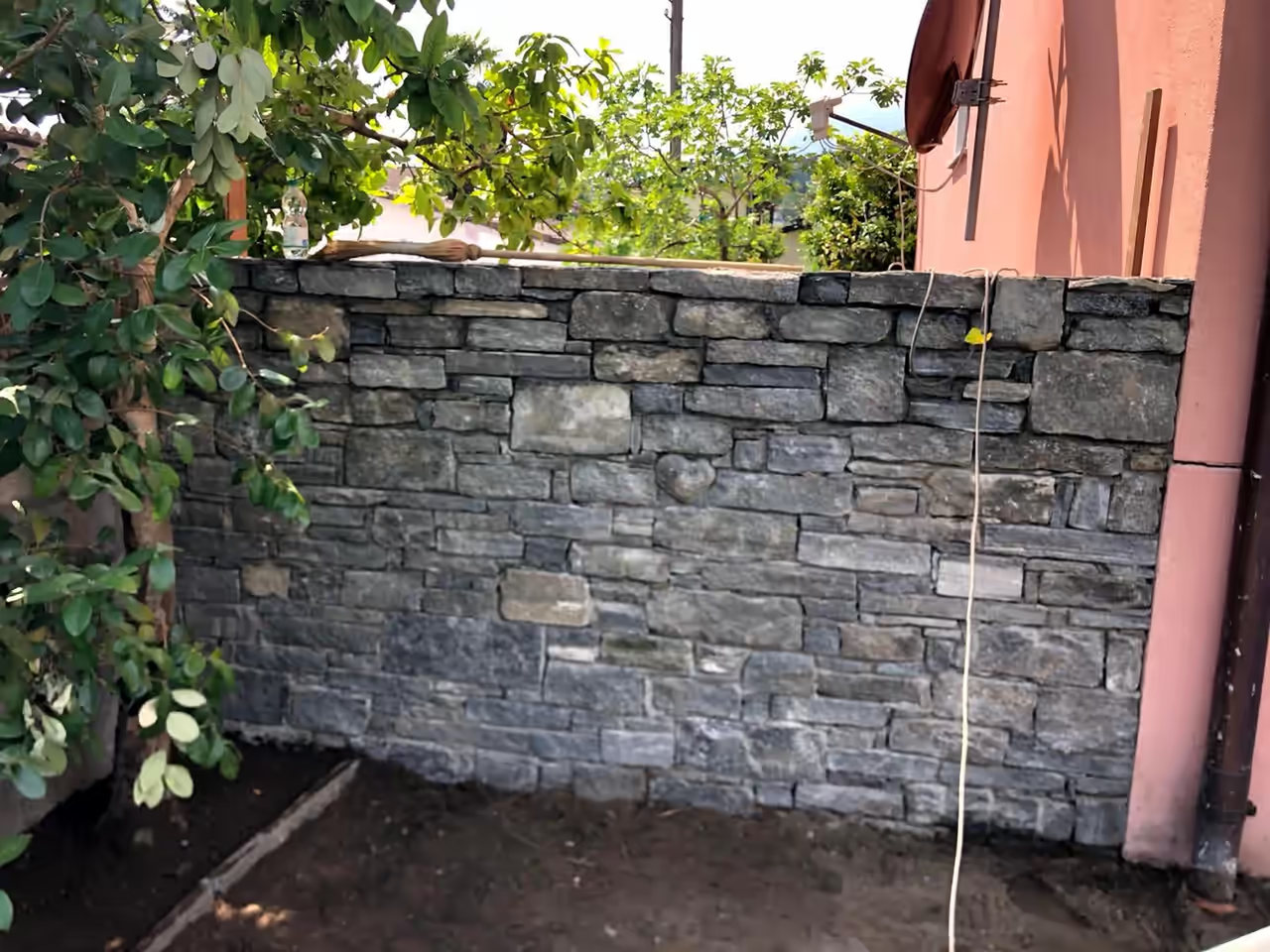
Stone walls are a hallmark of the Ticino landscape: they retain soil, frame beds and steps, and age gracefully when built with the right technique and stone. Nikola Giardini e Figli SAGL builds walls, low retaining structures, staircases and borders in natural stone for private gardens across Canton Ticino.
Dry-stone walls and stone retaining walls are part of the landscape of the Locarno area and the Ticino valleys: historic terraces, vineyards, hillside ronchi and residential properties on the slopes that fall toward Lake Maggiore have lived alongside these structures for centuries. For anyone with a house and garden between Brissago, Ronco sopra Ascona, Minusio or the hills above Locarno, a stone wall is not just decoration: it is often the only way to stabilise sloping clay-rich soil, hold a terrace and create flat usable beds. Local stone works well with the lake’s humid climate, drains rainwater and ages in a way that increases the property’s aesthetic value.
Works we carry out
- Retaining walls and terracing
- Stone steps and staircases
- Bed and path edging
- Repair and consolidation of existing walls
- Integration with paving and planting
When is it worth calling a gardener to build a stone wall?
Typical signs are ground that starts to slip after heavy rain, an existing terrace showing bulges or cracks in the face, a slope that keeps eroding despite planting, or the wish to turn a hard-to-manage hillside into a series of usable levels. An historic wall already in place that has lost stones, shows bulging or has tilted downslope is another classic case where consolidation is worthwhile before the damage spreads.
The most frequent situations for calling a professional are building a new residential terrace, creating decorative borders around beds and paths, installing stone steps to link different levels of the garden, and restoring traditional walls in hillside ronchi and country properties. It is best to plan these works between spring and autumn, avoiding the wettest months: stone is easier to work when dry and foundations need stable ground.
How does a stone wall project unfold step by step?
- 1. Site visit and design: we assess height, the load to be retained, slope and stone selection. We decide whether a dry-stone wall, a bound wall or a mixed structure with a concrete core is needed.
- 2. Excavation and foundations: we excavate for the foundations, lay a bed of lean concrete or compacted gravel suited to the expected load and prepare the rear drainage.
- 3. Laying the stone: we select stones by size and shape, stagger the joints, insert through-stones that bind the wall together and maintain the correct batter toward the uphill side.
- 4. Drainage and backfill: behind the wall we lay draining material, place geotextile and a perforated pipe where required and rebuild the ground uphill.
- 5. Finishes: we complete the coping, clean up the joints, settle the ground above and below and integrate the wall with beds, paths or accompanying planting.
What mistakes should be avoided when building a stone wall?
The most serious mistake is skimping on the foundations. Even a low stone wall takes significant loads, especially when the ground uphill becomes saturated: without proper foundations and the right batter toward the uphill side, after a few seasons the structure tilts or fails at a single point. The second recurring mistake is ignoring rear drainage: water that builds up behind the wall generates enormous hydrostatic pressure, capable of bulging even well-built walls. A line of drainage pipe and a layer of gravel behind the face solves the problem at the root.
Other common mistakes concern the laying itself: stones all of the same size, vertical joints aligned across multiple courses, missing through-stones to tie the front and back of the wall together. Using material unsuited to the microclimate — stones too prone to frost or too porous in areas exposed to the cold inland winds of Ticino — also drastically reduces lifespan. Finally, building too fast: natural stone requires time for selection and adjustment, and a wall built well today is an investment that lasts for decades.
Technique and materials
Each wall needs proper foundations, drainage behind the face and stone chosen for height and load. We use local stone and proven methods for long-term stability, including on sloping ground typical of the Locarno hills and Lake Maggiore shores.
From small decorative borders to larger retaining structures, we manage the site with the same care: accurate levels, clean finishes and respect for the architectural context. The result must be solid, coherent and easy to maintain.
How long does a typical stone wall project take?
Timing depends on length, height, type of stone and site access — a terrace on a slope always takes longer than the same wall on flat ground. A small decorative border or a short staircase is completed in 2–4 working days. An average retaining wall (8–15 linear metres, up to 1.5 metres high) typically requires 1–2 weeks on site, including excavation, foundations, laying and finishes. For larger retaining walls or complex restoration of historic terraces, timelines extend to 3–6 weeks. During the site visit we check access, stone availability and set a realistic schedule based on your site.
Where we work
We build stone walls in Ascona, Locarno, Minusio, Gordola, Riazzino, Brissago, Ronco sopra Ascona, Bellinzona and throughout Ticino. Contact us for a free quote and on-site survey.