Services
Garden design and construction in Ticino
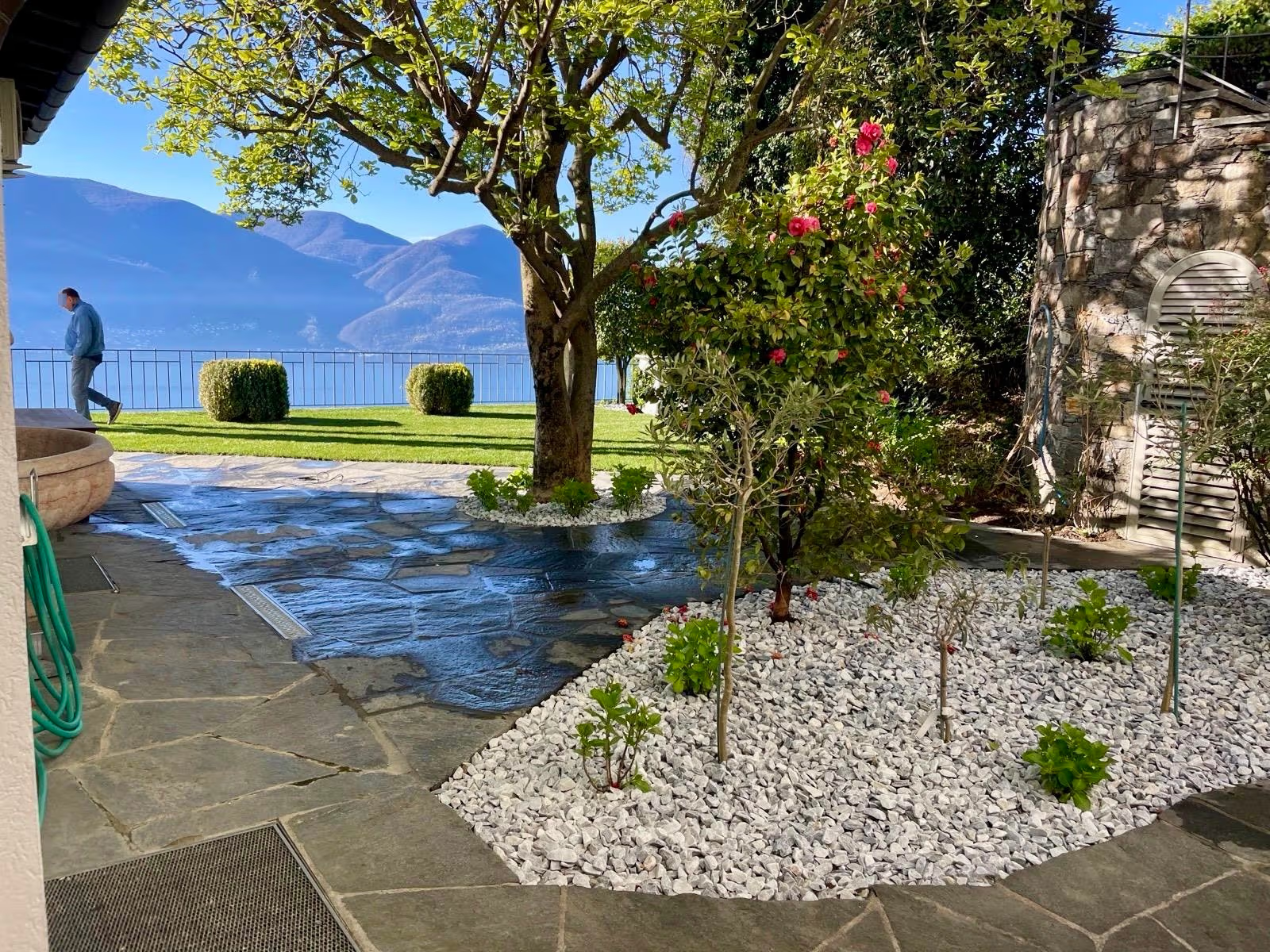
Building a garden is far more than planting grass and flowers: it means shaping a space that works with the soil, the climate and how you live outdoors. Since 2011, Nikola Giardini e Figli SAGL has delivered complete gardens across Canton Ticino, from excavation and soil preparation through to planting, lawn and finishing details.
Building a garden in the Locarno area and the Mendrisiotto means dealing with a particular microclimate: Lake Maggiore softens the winters but feeds summer humidity and heavy autumn rain, while hillside properties between Brissago, Ronco sopra Ascona and Minusio often sit on old terraced slopes, on clay-rich soil or directly on outcropping rock. For homeowners in Ticino, building a garden therefore means thinking about drainage before aesthetics, choosing species that tolerate both the intense summer sun and the inland frosts, and integrating structures in local stone that age well in the lake air.
What our service includes
- Site survey and layout advice
- Excavation, earth moving and substrate preparation
- Terracing, retaining structures and slope stabilisation
- Beds, hedges and paths within the green area
- Turf rolls or lawn seeding
- Planting on difficult slopes and reinstatement after works
When is it worth calling a gardener to build a new garden?
The best time to plan a garden is late winter or early spring: excavation and earth-moving works happen before the vegetation starts growing again, and lawn seeding or turf laying in March–April takes advantage of natural rainfall for rooting. A second useful window is early autumn, between late August and October, ideal for planting shrubs and trees: the ground is still warm, roots settle before frost arrives, and in spring the plant restarts with a full season of advantage.
It is worth calling in a professional gardener when you buy a new or renovated property and start from bare ground, when building works have left the garden in a difficult state, when a slope needs terracing or retaining structures to stabilise the hillside, or simply when your current garden no longer performs as it should — lawn that won't take, beds that flood after every storm, shady spots where nothing grows. In these cases an on-site visit lets us judge whether you need a targeted intervention or a full rebuild.
How does a garden construction project unfold step by step?
- 1. Site visit and design: we assess slope, exposure, access, existing drainage and the client’s wishes. From this we draw up a layout with levels, materials and phases.
- 2. Excavation and earth moving: we remove unsuitable soil, shape the planting areas and prepare the levels for paving and stone walls.
- 3. Load-bearing structures: we install terracing, stone walls, deep drainage and the conduits for irrigation and lighting, so they stay invisible in the final result.
- 4. Substrate and hard finishes: we lay selected topsoil, complete paths and edgings and integrate any fountains or decorative features.
- 5. Planting and handover: we lay turf or seed the lawn, plant hedges, shrubs and trees according to the design, fine-tune the irrigation and hand over the care instructions for the first season.
What mistakes should be avoided when building a garden?
The most common mistake is underestimating drainage. In Ticino, especially on the clay-rich soils of the Piano di Magadino or on compacted ground after building works, a single rainy season is enough to kill lawn and shrubs if the water has no way out. A second typical mistake is choosing the wrong species for the microclimate: Mediterranean plants set in pockets where winter frost concentrates, or soft-leaved varieties exposed to lake winds. Season matters too: planting in midsummer or midwinter almost always means replanting the following year.
Other mistakes concern the structures themselves: stone walls without proper foundations that lean after the first winter, paving laid before the ground has settled, irrigation sized incorrectly that leaves dry zones or waterlogs the roots. A well-run project respects the technical waiting times between one phase and the next — particularly between earthworks, structural work and planting — because every shortcut in this sequence is paid for in the years that follow.
How we work
Every project starts with a free site visit: we assess slope, drainage, sun exposure and site access. We plan phases to limit disruption and deliver a tidy result, using materials suited to the Ticino climate — often warmer and more humid near Lake Maggiore, cooler at altitude.
We work with you on practical choices: lawn type, hardy shrubs, integration with existing stone walls or paving. As a family business, the same team follows your project from start to finish, with clear timelines and transparent quotes.
How long does a typical garden construction project take?
Duration depends on the size of the garden, on-site accessibility and the complexity of the works. A targeted intervention — reseeding part of a lawn, laying a flower bed, a small terraced step — typically wraps up in 1–3 working days. A complete residential garden, with excavation, drainage, walls, irrigation and planting, generally needs 2–3 weeks of effective on-site work, spread over 1–2 months to respect ground settling times and plant rooting. For larger projects on slopes or with significant stonework, 2–3 calendar months is normal. During the survey we set a realistic schedule based on your site.
Where we work
We work throughout Canton Ticino with frequent projects in Ascona, Locarno, Minusio, Gordola, Riazzino, Brissago, Ronco sopra Ascona, Bellinzona, Mendrisio and surrounding areas. Contact us even if you live elsewhere in the canton — we organise surveys and works across the region.