The most common plant diseases in home gardens and how to spot them
- Plants
- Maintenance
- Prevention
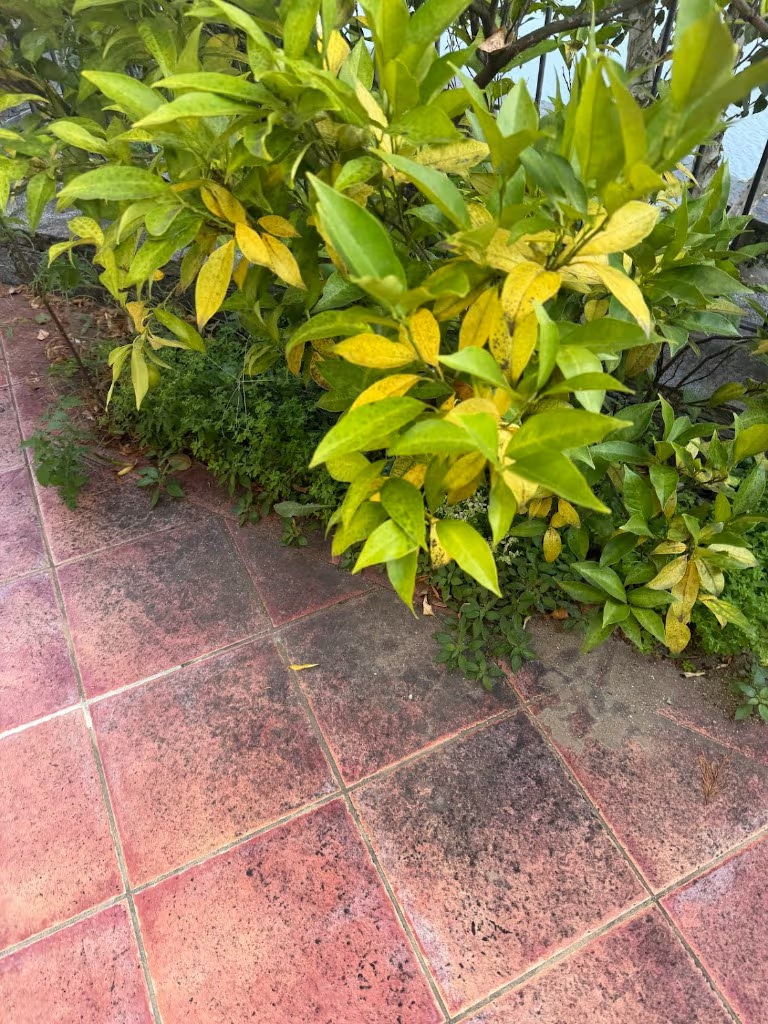
Garden plants can be hit by disease and pests at any time of year. In Ticino, especially around Lake Maggiore between Locarno, Ascona, Brissago and Ronco sopra Ascona, mild humid weather encourages fungi and pests in spring and autumn. With variations, similar conditions appear in valleys and Sottoceneri too.
A disease caught late not only hurts the individual plant: it risks spreading to the whole garden. A rose hit by downy mildew that goes untreated for two-three weeks becomes the source from which spores will attack the entire collection of roses the following season. That is why, even for someone tending the garden themselves, it is worth learning to recognise the main symptoms and to tell apart local problems from infections at risk of spreading.
Which types of plant disease are most frequent?
Ornamental plant diseases fall into four big families: fungal (powdery mildew, rust, downy mildew, scab, grey mould, by far the most common in humid climates like the Locarnese), bacterial (canker, collar rot, sticky leaves), viral (leaf mosaics, deformations less frequent but incurable: the affected plant has to be removed) and abiotic stress (nutrient deficiencies, water excess or shortage, sunburn, damage from late frosts). Recognising the category is the first step to picking the right intervention: fungicides do nothing against bacteria, antibacterials do nothing against viruses, and no treatment helps if the cause is only water stress.
Which warning signs of plant disease should you not ignore?
- Leaves with yellow, brown or black spots
- Leaves curling or dropping early
- Dry branches on otherwise healthy-looking plants
- White or grey mould on leaves
- Insects visible on bark or under leaves
- Dark or transparent droplets on leaves (pathological exudates)
- Stunted or asymmetric crown growth
- Tunnels or regular holes in trunk or branches
A single isolated symptom is almost never a disease; two or more symptoms appearing together in a small area of the garden are always a warning not to underestimate. The so-called "rule of three": three symptoms at once, three neighbouring plants affected, three weeks to intervene before the situation turns chronic. Another useful indicator is seasonal comparison: if the same plant or the same corner of the garden shows problems in the same months across different years, the cause is almost always environmental (exposure, drainage, ventilation) rather than purely pathological.
Which plant diseases are most widespread in home gardens?
Powdery mildew ("white mould") is one of the most common fungal diseases in Locarnese gardens. It appears as a white, floury film on leaves and affects roses, hedges and many ornamentals. It is favoured by sharp day/night temperature swings, typical of Ticino summers on the slopes above the lake. Rust is another fungus, recognisable by orange or brown leaf spots, often seen in damp gardens such as Minusio and Gordola, and in other Ticino locations with rainy summers or lake fog.
Plant family by plant family, the recurring pathologies are predictable: on roses (rosaceae), powdery mildew, downy mildew (Peronospora sparsa) and black spot (Diplocarpon rosae); on hydrangeas, powdery mildew and leaf-spot diseases (Cercospora); on magnolias, sooty mould secondary to scale-insect infestations; on wisterias and fruit trees, bacterial branch cankers; on the olive trees common in Locarnese gardens, peacock spot (Spilocaea oleagina) and olive knot (Pseudomonas savastanoi). Knowing each species' weaknesses in advance allows targeted checks in the right months, instead of discovering the problem only once the damage is done.
How do you prevent plant diseases?
Prevention starts with good garden care: regular pruning to air the canopy, consistent removal of damaged tissue and careful watering. Too much or irregular watering weakens plants and makes them more susceptible. Overhead irrigation also wets the foliage, prolongs the duration of the water film on the leaves and creates the ideal microclimate for fungal spores: drip systems that only water the soil are preferable, especially on roses, hydrangeas and vegetables.
Balanced fertilising reinforces the natural defences of the plant. Nitrogen excess (especially in spring) produces quick but soft, tender growth particularly attractive to powdery mildew, aphids and scale insects. Better to use formulas with a good NPK balance and micronutrient supplements (iron, manganese) where visible deficiencies appear (chlorosis). Rotating annuals and respecting planting distances also reduces pathogen transmission from plant to plant. A small detail often overlooked: pruning tools should be disinfected when moving from a diseased plant to a healthy one, otherwise we ourselves become transmission vectors.
If you see suspicious signs, act quickly. In many cases timely treatment prevents worse damage. Copper-based treatments (Bordeaux mixture, copper oxychloride) are a low-environmental-impact standard for spring and autumn prevention of many fungal diseases; for specific cases there are systemic fungicides to use with caution and in line with recommended doses.
What is the year-round disease-prevention calendar for ornamental plants?
A baseline calendar for gardens in the Locarnese: at the end of winter (February–March), copper treatment on roses, fruit trees and hedges prone to powdery mildew and scab, applied before bud break; in spring (April–May), careful clean-up of plant debris and sanitation pruning, first balanced feed; in summer (June–August), weekly monitoring of roses, hydrangeas and olive trees, scale-insect checks on magnolias and evergreen hedges; in autumn (September–October), second preventive copper spray on roses and fruit trees after the first leaf fall; in winter (November–January), collection and disposal of infected leaves to break the cycle of overwintering fungi. Adapted to the individual garden, this schedule significantly reduces the need for in-season curative treatments.
When is DIY enough and when do you need a gardener?
For limited problems (a few spotted leaves, a single struggling plant, aphid infestation on one rose) a targeted intervention with products available at the garden centre is often enough. When instead the symptom extends to several plants, recurs in the same spots season after season, or affects valuable or expensive-to-replace plants (mature magnolias, olive trees, adult palms), a professional site visit is the most economical choice in the medium term. A gardener identifies the pathogen with confidence (sometimes through lab analysis), picks the right active ingredient, calibrates the doses and plans follow-up treatments.
Particular attention should go to palms (very common in gardens facing Lake Maggiore) which can be attacked by the red palm weevil (Rhynchophorus ferrugineus): an aggressive pest that can kill a mature palm in a few months and for which targeted preventive treatments exist. Early diagnosis is critical; by the time the symptoms are obvious (drooping crown, dry central leaves), the plant is often already compromised.
Nikola Giardini e Figli SAGL provides maintenance and plant-health services across the canton of Ticino, with extensive experience between Locarno, Ascona, Minusio, Gordola, Riazzino, Brissago and Ronco sopra Ascona. We offer both one-off diagnoses and treatments and annual plant-health monitoring contracts, particularly suited to gardens with valuable or historic specimens. Contact us for an assessment: we also work beyond these towns, depending on the job.