How to protect hedges and shrubs from fungi and pests
- Hedges
- Maintenance
- Pests
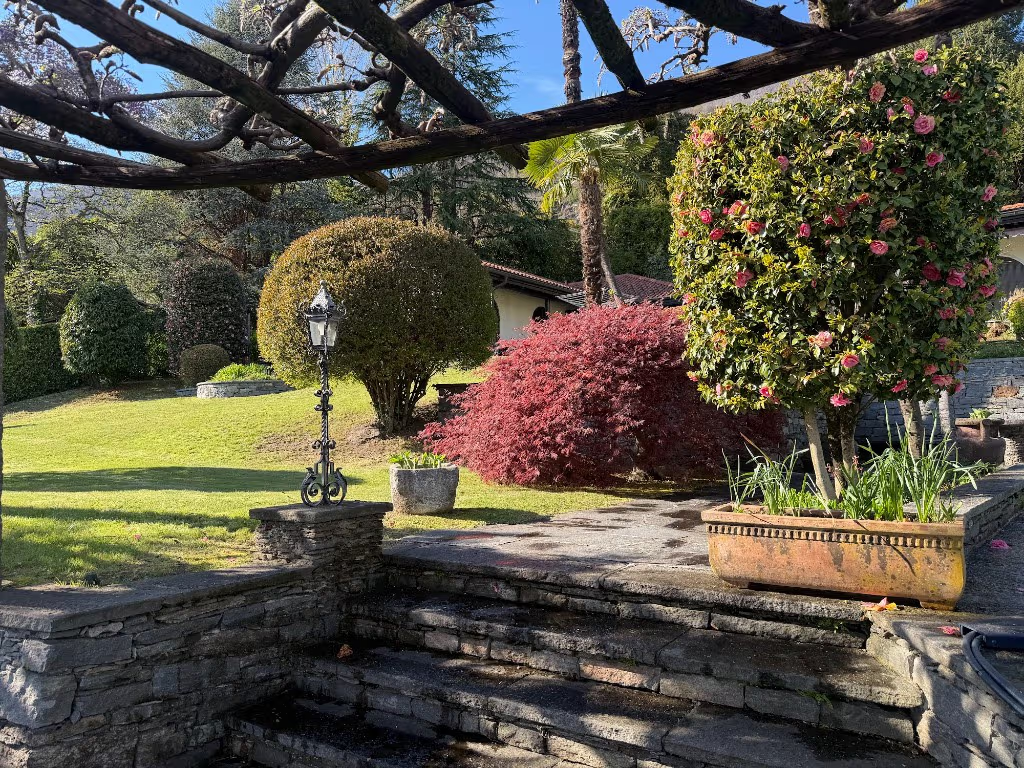
Hedges are among the first targets for fungi and pests, especially in wet seasons. Around Lake Maggiore the mild climate and lake humidity encourage these problems. In gardens between Ascona, Brissago, Ronco sopra Ascona and Minusio (and more generally along the lake and elsewhere in Ticino with a similar microclimate) untreated attacks often leave hedges visibly damaged.
A hedge is a long-term investment: box, laurel or yew grow slowly and a replaced plant takes years to fill the gap again. That is why, beyond aesthetic maintenance (cutting and shaping), good plant-health management makes the difference between a hedge that lasts decades and one that has to be rebuilt in patches. Over the years we have looked after hundreds of hedges across the canton and the recurring symptoms are always the same: what changes is how fast you act.
Which hedge species are most common in Ticino gardens?
In gardens around Locarno and elsewhere in Ticino the most common species are box (Buxus sempervirens), cherry laurel (Prunus laurocerasus), bay laurel (Laurus nobilis), privet (Ligustrum), yew (Taxus baccata), photinia (Photinia x fraseri) and spindle (Euonymus). Each one has its own weak spots: box fears the box moth and the Cylindrocladium buxicola fungus, cherry laurel suffers from powdery mildew and leaf spots, photinia is prone to entomosporium (the characteristic red spots). Recognising the species is the first step to choosing the right treatment.
How do you spot an active attack on hedges and shrubs?
The most frequent signs are visible even to an untrained eye, especially if you compare the hedge with photos from previous seasons. Typical symptoms include:
- Leaves with dark, yellowish or brown spots
- Branches drying out for no obvious reason
- Scale insects or red mites on the foliage
- Sticky leaves or white/grey coatings
- Premature leaf drop
- Progressive defoliation from the bottom or the centre of the hedge
- Larvae or cocoons visible among the branches (typical of box moth)
The earlier you intervene, the simpler and less invasive the treatment. A hedge checked every 3–4 months during the growing season rarely reaches the point of needing drastic cut-backs or full replacement.
What are the most common pests on hedges?
Scale insects attach to branches and feed on sap, slowly weakening the plant. The three forms most common in Ticino gardens are mealybugs (white filaments resembling cotton wool), brown shield scale (small brown shields fused to the branch) and floury scale. Their presence is often signalled by sooty mould. A black sticky coating on the leaves below, which is actually honeydew digested by the parasite, on top of which an opportunistic fungus develops.
Two-spotted spider mite (Tetranychus urticae) causes leaf discolouration in tiny dots that turn yellowish, and is particularly common in hot, dry spells such as summers on Lake Maggiore. It is controlled by lowering the hedge temperature (foliar irrigation early in the morning) and with targeted acaricides in the worst cases. In recent years the box tree moth (Cydalima perspectalis) has become the number-one problem for box-hedge owners: a single generation of larvae can completely defoliate a mature hedge in two weeks. Identification is easy (green larvae with black stripes and silky cocoons among the leaves) but timing matters: treating after defoliation saves the plant but loses the growing season.
Among fungi, grey mould (Botrytis cinerea) and powdery mildew are frequent on damp hedges in the Locarnese, for example in Gordola, Riazzino and Locarno, with similar cases elsewhere in the canton. Downy mildew is more frequent after prolonged spring rain, while root rot (Phytophthora) shows up in poorly drained clay soils: in this case the visible symptom (yellow leaves, dry branches) is only the final stage, because the real problem is in the roots and requires soil drainage and a review of the irrigation system.
How do you prevent and treat hedge pests?
The most effective prevention is regular pruning that lets air move inside the hedge. A hedge that is too dense creates a humid, shady microclimate inside. Exactly what fungi and scale insects look for. Formative cuts that leave the base slightly wider than the top (a truncated-pyramid shape) let light reach the full height of the plant, reducing the zone favourable to pathogens.
Removing dry or diseased parts as soon as they appear limits spread. Infected clippings must be collected in closed bags and disposed of separately: leaving them on the ground or in home compost re-infects the same hedge the following season. For box moth, pheromone-trap monitoring helps catch the first generation (April–May) and treat before the larvae defoliate the hedge.
Treatments can be preventive (in spring, with low-impact copper-based products for ornamental gardens) or curative once the pathogen is identified. Choosing the active ingredient and the right moment is critical: a wrong treatment is not only useless but can favour resistance in pests. For hedges near water features, fountains or pools, the product choice has to be calibrated to avoid contamination.
What is the year-round hedge treatment calendar?
An indicative calendar for hedges in gardens around Locarno and across Ticino includes: in March–April a first preventive treatment with copper-based products before bud break, paired with visual inspection for overwintering box moth and scale insects; in May–June the first formative cut and active monitoring with pheromone traps; in July–August close checks on powdery mildew and spider mites, common in the hot, dry months on the lake side; in September–October the maintenance cut and a possible second curative treatment to close the season; from November to February hedges are dormant, but it is the right time to act on struggling specimens (rejuvenation pruning) and to plan new plantings or replacements.
When is it best to call a professional gardener?
If the hedge shows more than one symptom at the same time, has already lost visible foliage or is made up of valuable specimens (decade-old box, mature yew), DIY is rarely enough. An experienced gardener can quickly identify the issue, tell pathologies from stress (drought, over-fertilisation, mechanical damage) and suggest the right approach. In many cases a single targeted intervention solves the problem, while repeated attempts with the wrong products make it worse.
Pruning a mature hedge also has its technique: cherry laurel and box should be cut with hand shears on prized specimens (a strimmer burns the leaves and multiplies entry points for fungi), while yew and photinia handle the electric hedge trimmer well. Knowing the species avoids mistakes that linger for years.
Nikola Giardini e Figli SAGL offers hedge pruning, treatment and care throughout the canton of Ticino, with very frequent work between Ascona, Locarno, Minusio, Gordola, Riazzino, Brissago and Ronco sopra Ascona. We work both on one-off interventions (diagnosis + treatment) and on annual monitoring contracts, particularly suited to residences, B&Bs and villas with valuable boundary hedges. For other municipalities we still arrange site visits when feasible.