Why the lawn turns yellow and how to restore it
- Lawn
- Maintenance
- Irrigation
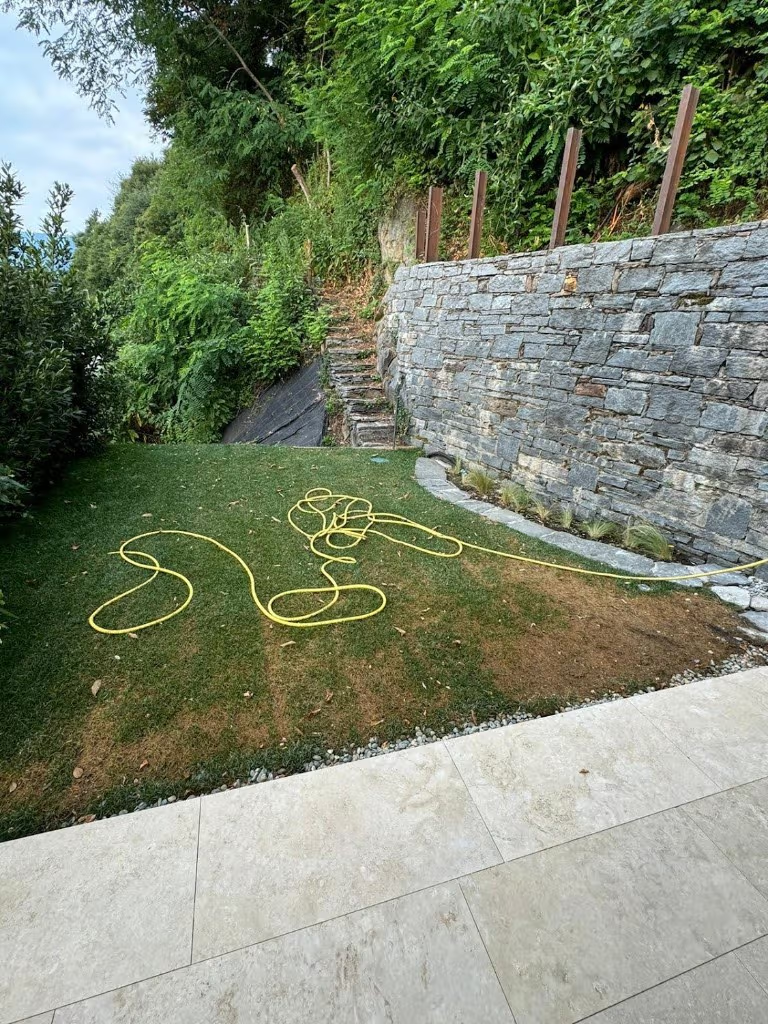
A yellow lawn is one of the most common garden issues. Causes vary, and finding the source is the first step to fixing it. Around Lake Maggiore, from Locarno to Gordola and Riazzino to Minusio, a stressed lawn is very noticeable, especially on villas and homes facing the water. But the same stress affects turf inland across the canton.
The lawn is the part of the garden that reacts first to everything: too much or too little water, wrong mowing, off-season fertilising, root diseases. That makes it a useful first read on the overall health of the garden. On our site visits it often happens that the client calls about a yellow lawn and the real problem is somewhere else. A poorly programmed irrigation, soil compacted by construction works, or a DIY feed at the wrong dose.
What are the common causes of lawn yellowing?
- Lack of water during hot, dry periods
- Over-irrigation causing puddling and root suffocation
- Low nitrogen and nutrients in the soil
- Soil compaction blocking root respiration
- Fungal attack or pests such as mole crickets or insect larvae
- Mowing too short with blades set too low or blunt
- Thick thatch (build-up of clippings) preventing water from reaching the roots
- Dog or cat urine, showing as small round patches
What symptoms typically show on a yellowing lawn?
Recognising the pattern of yellowing is already half the diagnosis. Round patches 20–60 cm across, brown in the centre and green at the edge, are the classic sign of "dollar spot" (Sclerotinia homoeocarpa), a fungus common on well-fed villa lawns. Wider concentric rings (1–3 m), with a dark green edge and lighter centre, indicate fairy ring. Uniform yellowing across the surface points instead to nutrient shortage or general water stress. Yellow stripes following the mowing direction point to blunt blades or a cut set too low. Scattered irregular patches, where the grass pulls up in clumps revealing white C-shaped larvae, are a sign of cockchafer or mole cricket larvae.
Even when the yellowing appears matters: patches that turn up after a warm, humid night often point to a fungus; quick whole-lawn yellowing after a DIY feed almost always signals overdose ("fertiliser burn"); and new patches near paths or low walls after summer often indicate soil that is too dry because the masonry below radiates heat.
How do you fix a yellow lawn?
If drought is the issue, adjust watering: one or two generous waterings a week (10–15 mm per square metre) beat a few minutes every day, because short waterings only keep the top layer moist and the roots stay short and fragile. If the soil is compacted, mechanical aeration (core aeration) followed by a top-dressing of fine silica sand helps a lot: the intervention is demanding but turns a struggling lawn around in two or three months.
A nitrogen-rich feed can correct a nutrient shortage, but the dose is critical: too much nitrogen in summer burns the roots and encourages fungal disease. Better to split the feeding (spring with balanced NPK, summer with slow-release formulas, autumn with potassium-rich product). Fungal problems may show as circular yellow-brown patches that need targeted treatment. Usually a contact or systemic product matched to the identified pathogen.
The mower blade is also an underrated variable: blunt blades tear the grass instead of cutting it, creating small wounds through which pathogens enter easily. Sharpening the blades every 30–40 hours of work or at the start of each season is a habit that makes a difference.
Which lawn types work best in Ticino?
The mixes best suited to Ticino gardens combine tall fescue (drought- and traffic-tolerant), perennial ryegrass (quick to germinate, great for repairs) and Kentucky bluegrass (dense, attractive look). On the hotter, sunnier slopes of the Locarnese (Ascona, Brissago, Ronco sopra Ascona) we favour tall fescue–based mixes to reduce summer water needs. In more shaded valley gardens or under mature canopies (maples, beeches), red fescue and supina bluegrass mixes perform better.
Roll-out turf (Rollrasen) is instead the choice when you want an immediate result (full cover in 24 hours) and is particularly suited to representative villas, seasonal B&Bs or events. It costs more than seed but saves time and removes the risk of uneven germination. Installation needs to be scheduled for spring or early autumn, avoiding the high summer temperatures that dehydrate the rolls before rooting.
When should you replace the lawn?
If more than 30–40% of the surface is yellow, with widespread weeds (couch grass, invasive clover) or symptoms that come back year after year despite targeted treatments, the most rational solution is full renewal. We mill the existing soil, correct it (sand + peat or mature compost based on the analysis), roll it and finally seed or lay rolls.
In milder cases, overseeding is enough: scarify the lawn to remove the thatch, spread the new seed mix, cover with a thin layer of topsoil and keep moist for 15–20 days. This is often requested on well-exposed lakeside plots, for example between Brissago, Ronco sopra Ascona and Ascona, where private gardens must stay neat. We propose the same approach in other Ticino municipalities with similar needs. For large areas (above 500 m²) overseeding restores the lawn in 4–6 weeks at a cost far below full renewal.
How do you plan annual lawn maintenance?
An indicative calendar for a healthy lawn in the Locarno area: March–April first high mowing (4 cm), opening NPK feed, irrigation system check; May scarification and core aeration if needed; June–August weekly mowing at 5–7 cm, summer slow-release feed, fungal disease monitoring; September potassium-rich autumn feed, possible overseeding on thinning patches; October–November final mowings at 4 cm, leaf collection, edge tidying; December–February no mowing, equipment maintenance and planning. Planning the work in advance spreads the annual spend and catches each pass at the right time, avoiding off-season feeds or cuts on wet grass that do more harm than good.
Nikola Giardini e Figli SAGL handles maintenance, reseeding and roll-out turf across the canton of Ticino, with regular projects in Locarno, Minusio, Gordola, Riazzino, Brissago, Ronco sopra Ascona and nearby. We offer free site visits to assess the lawn condition and propose both one-off interventions and annual maintenance contracts, particularly attractive for surfaces above 200 m². If you live elsewhere, ask anyway: we organise site visits throughout the region. Request a quote.