How to prepare your garden for winter: a practical guide
- Winter
- Maintenance
- Garden
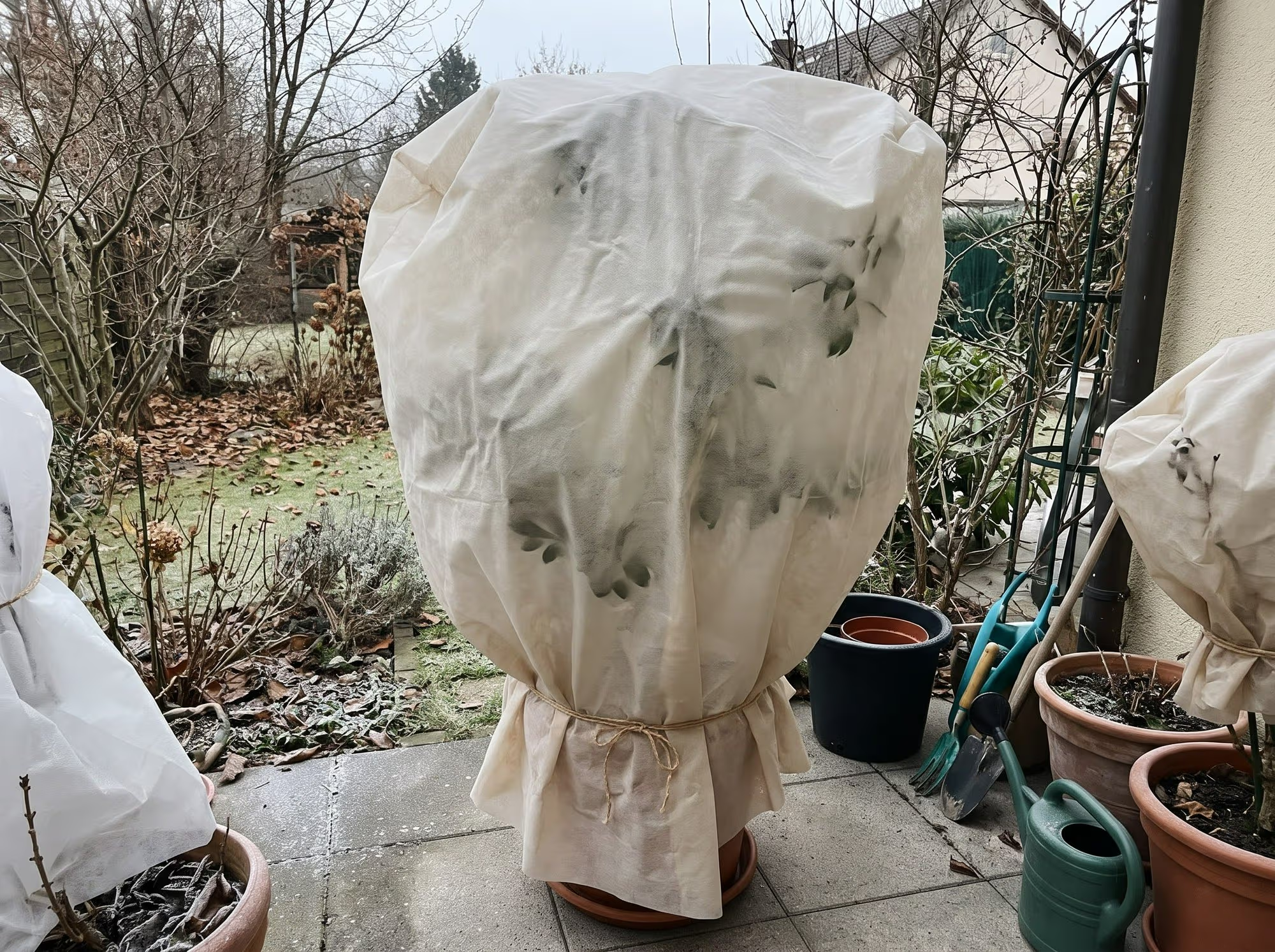
Along Lake Maggiore, winter arrives later than north of the Alps, and that often catches people out: end-of-season tasks get pushed back until a sudden night frost or a week of cold rain damages pipes, pots and tender plants. Between the Locarno area, the valleys and Bellinzona, microclimates change noticeably within just a few kilometres, so getting the garden ready before the cold sets in remains the easiest way to see it bounce back healthy in spring.
When should you start preparing your garden for winter?
The right timing depends on elevation and exposure rather than a fixed date on the calendar. In the valleys (Maggia, Verzasca, Onsernone, Centovalli), in shaded plots and further inland around Bellinzona, it is best to finish by late October or early November. In the milder lakeside belt from Brissago to Ascona, Locarno and Gambarogno, you usually have until mid or late November.
The practical rule is to act before night temperatures drop close to zero on a regular basis and before the soil becomes waterlogged or frozen. Working on dry or slightly moist soil avoids compacting it and lets mulch insulate the roots properly.
How should you prepare the lawn before the cold?
Grass goes dormant once temperatures stay below about 7–8 °C, but until then it keeps growing slowly. Make the final cut on a dry day, setting the mower blades to roughly 5 cm:
- Too short (under 4 cm): the grass has too little leaf area, suffers more from frost and leaves space for moss.
- Too long (over 6–7 cm): the blades flatten under winter rain or wet leaves, trapping moisture and encouraging fungal diseases such as snow mould.
Just as important is raking up fallen leaves regularly. A wet blanket of leaves cuts off light and air, smothers the turf and leaves yellow or bare patches in spring. Healthy leaves can go onto beds as a light mulch or into the compost heap; diseased leaves (such as those with black spot or powdery mildew) should be disposed of separately.
Finally, whenever frost or frozen ground arrives in winter, avoid walking on the lawn: frozen grass blades turn brittle, snap underfoot and leave dark footprints that take weeks to recover.
How do you protect Mediterranean plants, palms and pots from frost?
Gardens in Ticino mix hardy species with Mediterranean and exotic plants (olives, citrus, oleanders, bougainvillea, palms, young camellias) that cope well with cool days but suffer during night frosts, especially with wind or waterlogged roots.
Container plants are the most vulnerable because their roots lack the insulation of the ground and freeze much faster than the foliage:
- Move tender pots to a sheltered spot against a south-facing wall, under a porch or into a bright, frost-free cold greenhouse.
- Group pots that stay outdoors tightly together to create a more stable microclimate.
- Raise pots on pot feet or bricks and remove saucers so rainwater drains away instead of freezing around the roots (which also stops terracotta pots from cracking).
- Wrap the outside of the pot with hessian, coconut fibre or bubble wrap without ever blocking the drainage holes.
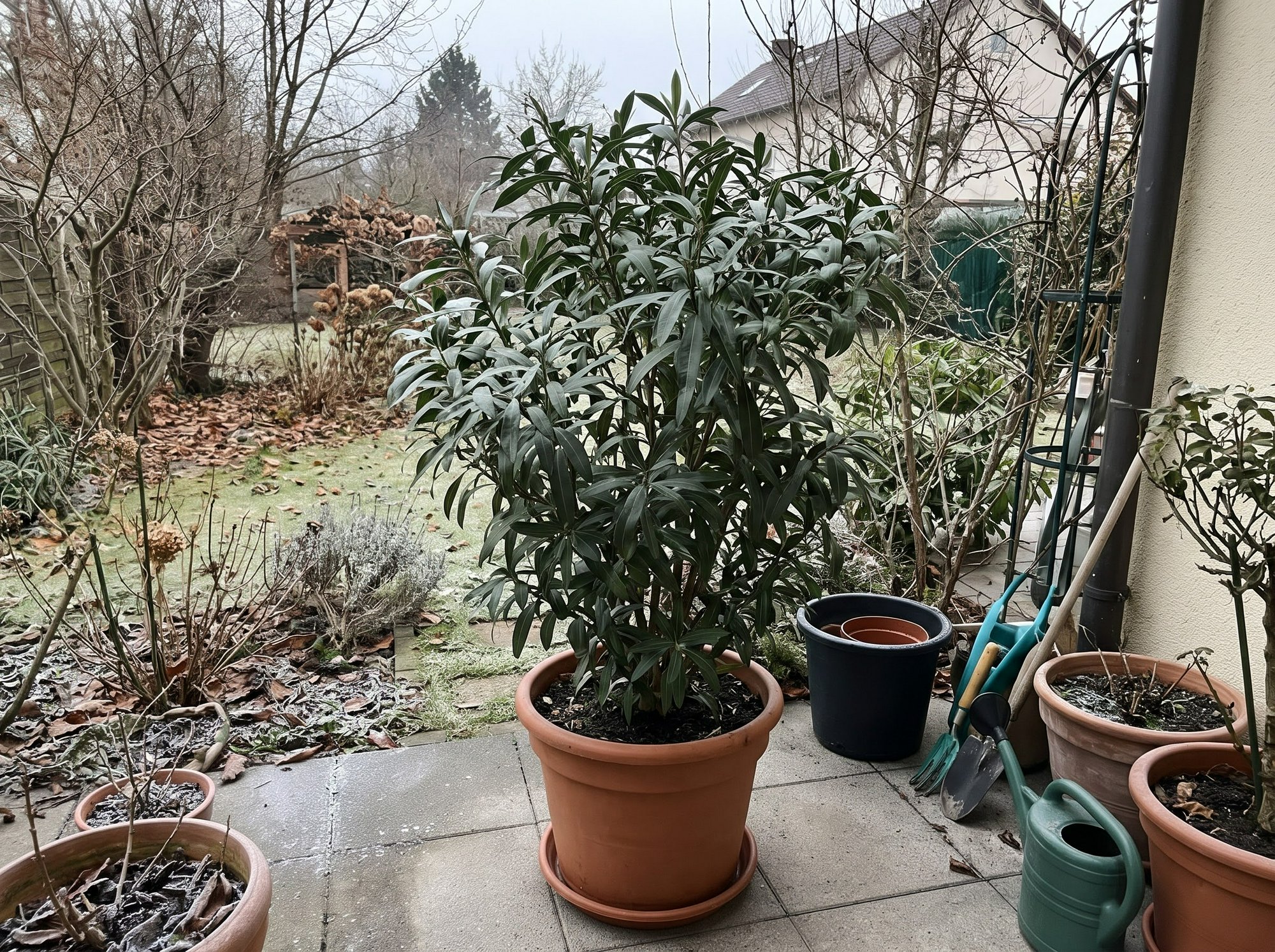
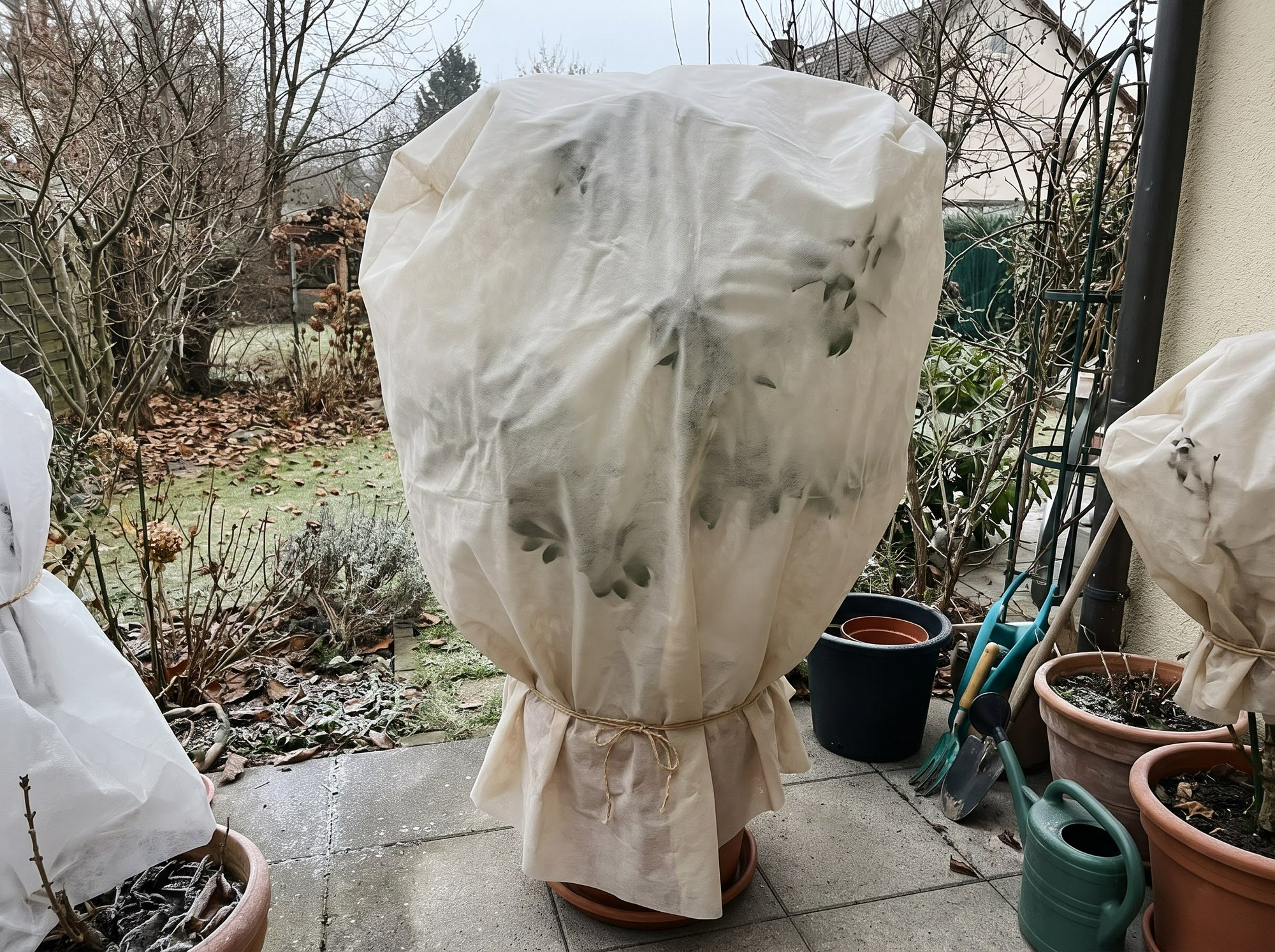
For more tender plants growing in the ground:
- Spread a 5–8 cm layer of mulch around the base (chipped bark, well-rotted compost or shredded leaves), leaving a few centimetres clear around the stem collar to prevent rot.
- When frost is forecast, wrap the canopy in breathable horticultural fleece or hessian and secure it well against wind. Avoid sealed plastic sheeting, which traps condensation and encourages mould and scorch on sunny days.
- During mild, sunny spells, open or loosen the fleece temporarily so air can circulate.
What should be pruned before winter and what is better left until later?
Before freezing weather, stick to light safety pruning: remove dead, broken or diseased branches, shorten overly long shoots that could snap in winter wind or wet snow, and clear away diseased perennial stems.
Harder pruning of shrubs, fruit trees, roses and wisteria is almost always better left until late winter (between February and March, depending on species and elevation). Cutting too early in autumn exposes fresh wounds to frost and, if a mild week follows, can trigger soft new shoots that the first freeze burns off. Many spring-flowering shrubs such as forsythia and mophead hydrangeas have also already set their buds, so pruning now would cost you next year’s blooms.
How do you shut down irrigation systems and fountains for winter?
This is where the most expensive winter damage happens. Water left inside pipes, solenoid valves, outdoor taps or fountain pumps expands as it freezes and can split fittings and underground lines.
- Shut off the main supply valve to the irrigation system and switch the controller off (or to winter mode).
- Drain the lines via the drain valves or by blowing them out with low-pressure compressed air, especially for underground pop-up sprinkler systems.
- Open outdoor taps after shutting off the indoor isolation valve so residual water drains out, and insulate exposed pipe runs.
- Empty garden hoses, rainwater butts and ornamental fountains; clean pumps and filters and store them frost-free.
What other checks should you do on drainage, beds and tools?
- Channels, grates and drains: clear sumps and drainage channels of leaves and soil, especially beside retaining walls, steps and paving, to prevent standing water and surface ice.
- Beds and soil: pull remaining weeds before they set seed and apply mulch while the soil is still workable.
- Tools and outdoor furniture: clean and sharpen secateurs and shears, service or winterise the lawnmower, and clean and store or cover outdoor furniture and barbecues.
Which mistakes should you avoid before winter?
- Leaving the irrigation system full of water hoping for a mild winter: a single freezing night is enough to split valves and pipes.
- Wrapping plants in plastic: it traps moisture and condensation, encouraging mould and rot.
- Feeding the lawn with high-nitrogen fertiliser in late autumn: it drives soft growth vulnerable to frost and disease.
- Leaving saucers full of water under outdoor pots or letting containers sit straight on frozen paving.
- Cutting everything back hard in November, exposing fresh cuts and buds to the cold.
Nikola Giardini e Figli SAGL handles winter preparation, garden maintenance, pruning and irrigation winterisation from the Locarno area to Bellinzona. If you want your garden ready before the cold without the hassle, get in touch: site visits and quotes are free.