Services
Tree transplanting with crane truck in Ticino
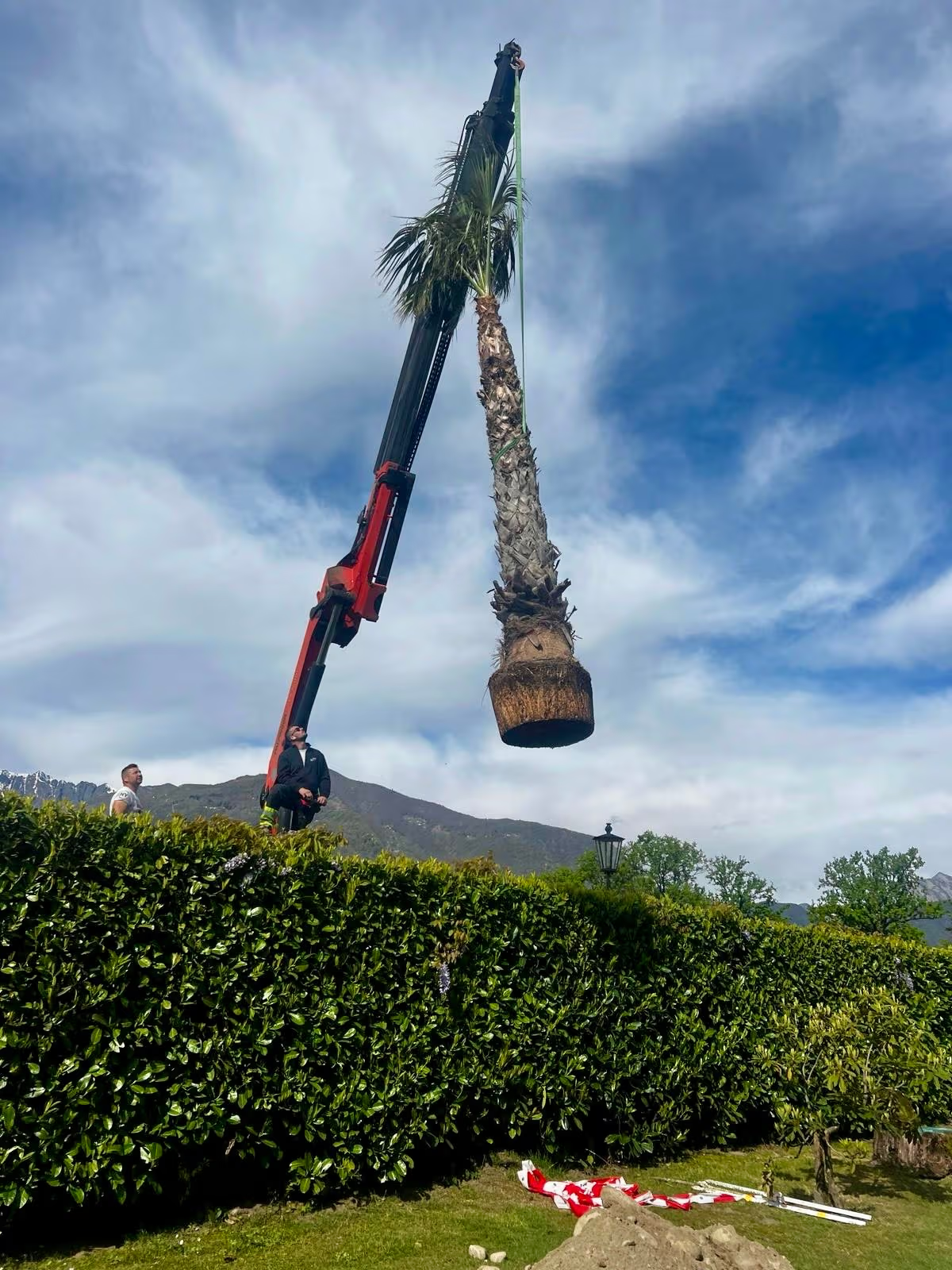
Transplanting mature trees is not a planting — it is a technical operation that combines nursery planning, heavy equipment and precise seasonal timing. Nikola Giardini e Figli SAGL transplants large trees across the canton of Ticino, with our own crane truck and the experience accumulated since 2011 on century-old olives, historic palms, magnolias and ornamental residential trees.
Moving a mature tree instead of cutting it down means preserving decades of growth: a 150-year-old olive tree or a well-rooted Canary Island palm cannot be replaced with a nursery specimen. For Locarnese gardens, where many villas carry trees planted in the 70s and 80s, transplanting is often the only way to renovate the garden without losing the green heritage built up over two generations.
Which trees we can transplant
- Century-old olive trees (from nurseries in central-southern Italy or from Ticino gardens)
- Mature palms (Phoenix canariensis, Trachycarpus, Washingtonia)
- Magnolias, holm oaks, ornamental oaks up to about 6-8 metres high
- Maples, birches and ornamental trees from gardens being renovated
- Mature citrus trees in pots or in the ground
- Historic trees with sentimental or documentary value
When does it pay to call a gardener for a transplant?
Common situations include renovations of historic gardens where a tree "blocks" a new layout but the owner doesn't want it cut down, purchases of century-old olives from specialised resellers that require transport and placement, recovery of trees from building sites (emergency removals before demolition or excavation), and reorganising private nurseries.
The best time to transplant in Ticino is between November and February for deciduous trees (dormancy period) and between late winter and early spring for evergreens and palms, before the growth push starts. Olives tolerate transplants even in summer provided post-transplant irrigation is properly managed, but that's a choice requiring a site visit before confirmation.
How a transplant runs step by step
- 1. Site visit and planning: assess tree size, crane truck accessibility, distance between pickup and placement points, constraints (overhead cables, walls, nearby trees). Plan the seasonal window.
- 2. Root ball preparation: dig the perimeter at a distance calibrated to the trunk, work manually to preserve main roots, wrap the ball with burlap and metal mesh for transport.
- 3. Lifting with crane truck: position the truck so both pickup and placement points are within the boom radius, attach the tree with protected straps, lift slowly verifying balance.
- 4. Transport: if transplanting to a different garden, secure the tree on the flatbed for the journey. Crown tied or wrapped to reduce wind stress during transport.
- 5. Placement at the new location: dig the receiving pit wider than the ball, prepare the bottom with drainage and amendment, position the tree, adjust orientation (original exposure preserved when possible), backfill in layers with light compaction.
- 6. Staking and post-transplant irrigation: install support poles for the first 1-2 years, set up a localised irrigation ring for the critical phase of root regeneration. Agree seasonal checks until full recovery.
What mistakes to avoid during a transplant
The most expensive mistake is a root ball that is too small: cutting main roots too close to the trunk drastically reduces survival chances. The ball diameter depends on species and age, but indicatively should be calibrated on at least 8-10 times the trunk diameter. Another frequent mistake: transplanting in the wrong period. An olive transplanted mid-summer without proper localised irrigation loses most of its crown in the first months and may not recover.
How long does a transplant typically take?
The transplant itself (ball preparation, lifting, transport, placement) typically closes in 1-2 days for a medium-sized tree (4-7 m). For especially large century-old olives or tall mature palms, 2-3 days may be needed with extra coordination (road closures, temporary removal of overhead cables). Root regeneration, on the other hand, is a 2-3 year process: in the first 18 months the tree needs controlled localised irrigation and crown monitoring.
Where we work
We transplant mature trees in Ascona, Locarno, Minusio, Gordola, Riazzino, Brissago, Bellinzona, Lugano, Mendrisio and across Ticino. We also coordinate transport from nurseries in Tuscany, Puglia or Lombardy for century-old olives and premium ornamental species. Contact us for a free site visit and a detailed quote.