Services
Outdoor paving and walkways
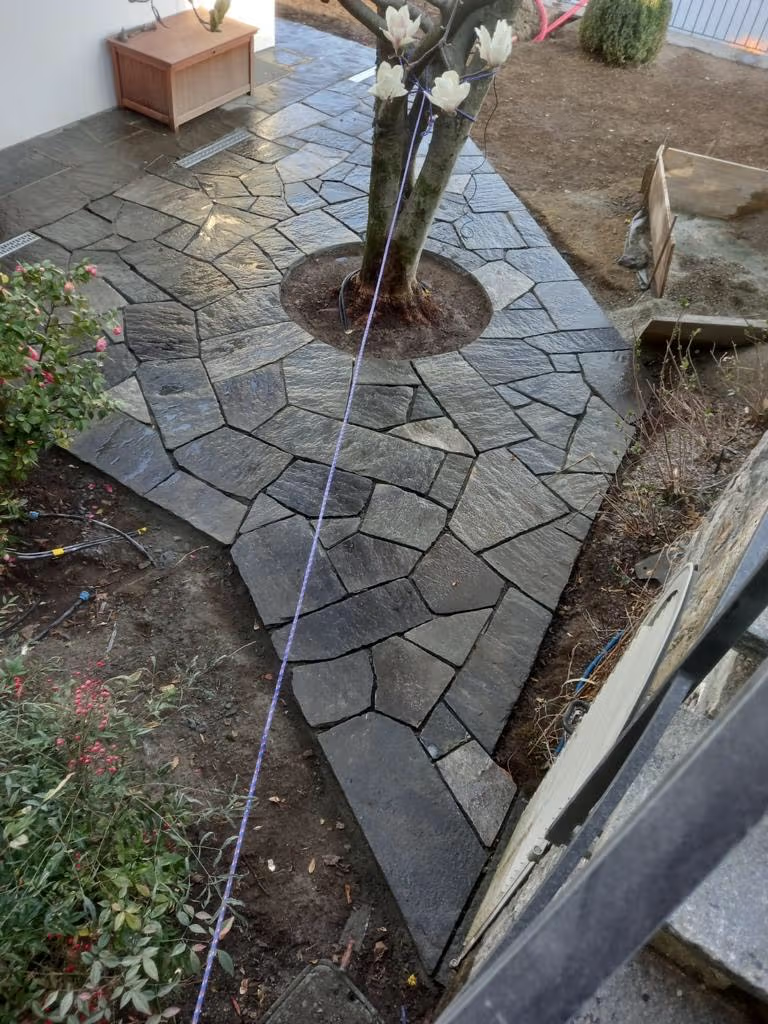
Well-built outdoor paving enhances your home and garden, improves usability and withstands weather and frost for years. Nikola Giardini e Figli SAGL designs and installs paving, walkways, terraces and parking areas across Canton Ticino, choosing materials to match use and surroundings.
In Ticino gardens, outdoor paving works under demanding conditions: heavy autumn rain, overnight frost inland, strong summer sun on terraces overlooking Lake Maggiore. Many paths in Ascona, Locarno and Minusio cross sloped terraced ground or clay-rich soils that move with the freeze–thaw cycle, and private parking has to handle daily car traffic on sub-bases that are not always stable. For local owners, good paving therefore means materials suited to the local microclimate, draining joints that don’t crack at the first winter, falls designed to direct water away from the house, and clean transitions to lawn, beds and stone walls so that the whole outdoor space looks coordinated rather than patched together.
Types of work
- Paths and walkways in cobbles or natural stone
- Mosaic and decorative finishes
- Patios, terraces and sitting areas
- Concrete parking: new surfacing and pothole repair
- Edging, kerbs and integration with planting
- Drainage and sub-base preparation
When is it worth calling a gardener for outdoor paving?
The clearest sign is the appearance of cracks, dips or stones that shift underfoot: they indicate a sub-base that has given way or inadequate drainage, problems that worsen quickly if ignored, especially after the first winter of freeze–thaw. Persistent puddles after rain, crumbling joints, or surfaces gone slippery with moss and damp are also signals that it is time to act. It is best to plan the work between spring and early autumn, when the ground is dry and temperatures allow mortars and binders to set properly.
Typical situations for calling a professional are a new driveway, replacement of a deteriorated concrete parking slab, redoing a garden-level terrace, or completing a new garden with paths that link house, pedestrian entrance and seating area. Even a small repair of holes in concrete or of loose stones is best entrusted to someone who knows the sub-base: a badly executed patch tends to reopen within 1–2 seasons, often pulling the surrounding area down with it.
How does an outdoor paving project unfold step by step?
- 1. Site survey and levels: we measure, check falls toward rainwater drainage and identify connections, gullies and critical points to respect.
- 2. Excavation and sub-base preparation: we remove the old layer or topsoil, lay compacted stabilised material in layers and set the levels.
- 3. Drainage and edging: we install any pipework or gullies and place kerbs and edging to contain the paving.
- 4. Laying the material: we install cobbles, natural stone, slabs or poured concrete, taking care of joints, alignment and transitions to planting.
- 5. Finishes and handover: we seal the joints, clean the surface, check water runoff and hand over the area ready for use.
What mistakes should be avoided with outdoor paving?
The first mistake is skimping on the sub-base. Paving is only as good as the bed it sits on: a few centimetres of poorly compacted base translate, after the first winter, into dips and broken stones. The second mistake is ignoring the falls: a surface that is too flat traps water that, once frozen, lifts slabs and joints; the wrong fall sends water toward the house, with possible seepage into basements or garages.
Material choice also matters: glossy surfaces or very smooth slabs become dangerous in the rain, especially near the lake where humidity keeps a near-permanent film of water on them; overly porous stones absorb oil and leaf stains and look tired within a few years. Finally, ignoring concrete curing times or loading a freshly poured parking area means compromising the work from the start. Good paving takes time: an extra week on site saves years of patch repairs.
Quality and durability
Paving longevity depends on sub-base, fall and drainage. Before laying we check the ground, level it and install draining layers where needed. We focus on details: even joints, correct falls for rainwater, clean transitions to lawn or stone walls.
Between Ascona and the Locarno area — and across the canton — we have laid cobble paths, parking surfaces and repaired worn concrete. Every job comes with photos and a clear quote before work begins.
How long does a typical outdoor paving project take?
Timing depends on surface area, the chosen material and the condition of the sub-base. A small walkway or the repair of holes in a parking area typically takes 1–3 working days. An average terrace or a full driveway is completed in 1–2 weeks, including excavation, sub-base, laying and finishes. For a new concrete parking area or a larger paved space, timelines extend to 2–4 weeks, with mandatory pauses for concrete curing. During the site visit we confirm realistic timing based on your project, accessibility and the time of year.
Where we work
We install outdoor paving throughout Ticino: Ascona, Locarno, Minusio, Gordola, Riazzino, Brissago, Bellinzona, Mendrisio and nearby municipalities. Request a free site visit for measurements, materials and scheduling.